In the protective coatings industry, especially within sectors such as railcar, tank, and infrastructure maintenance, the balance between long-term performance and field applicability remains a central challenge. For decades, the industry has relied on layered multi-coat systems, each layer optimized for a specific function, such as adhesion, chemical resistance, or UV stability. While technically effective, this architecture often proves inefficient in practice, introducing complexity during application and increasing the potential for inter-coat adhesion issues, cure incompatibilities, and long-term failure under real-world environmental conditions.
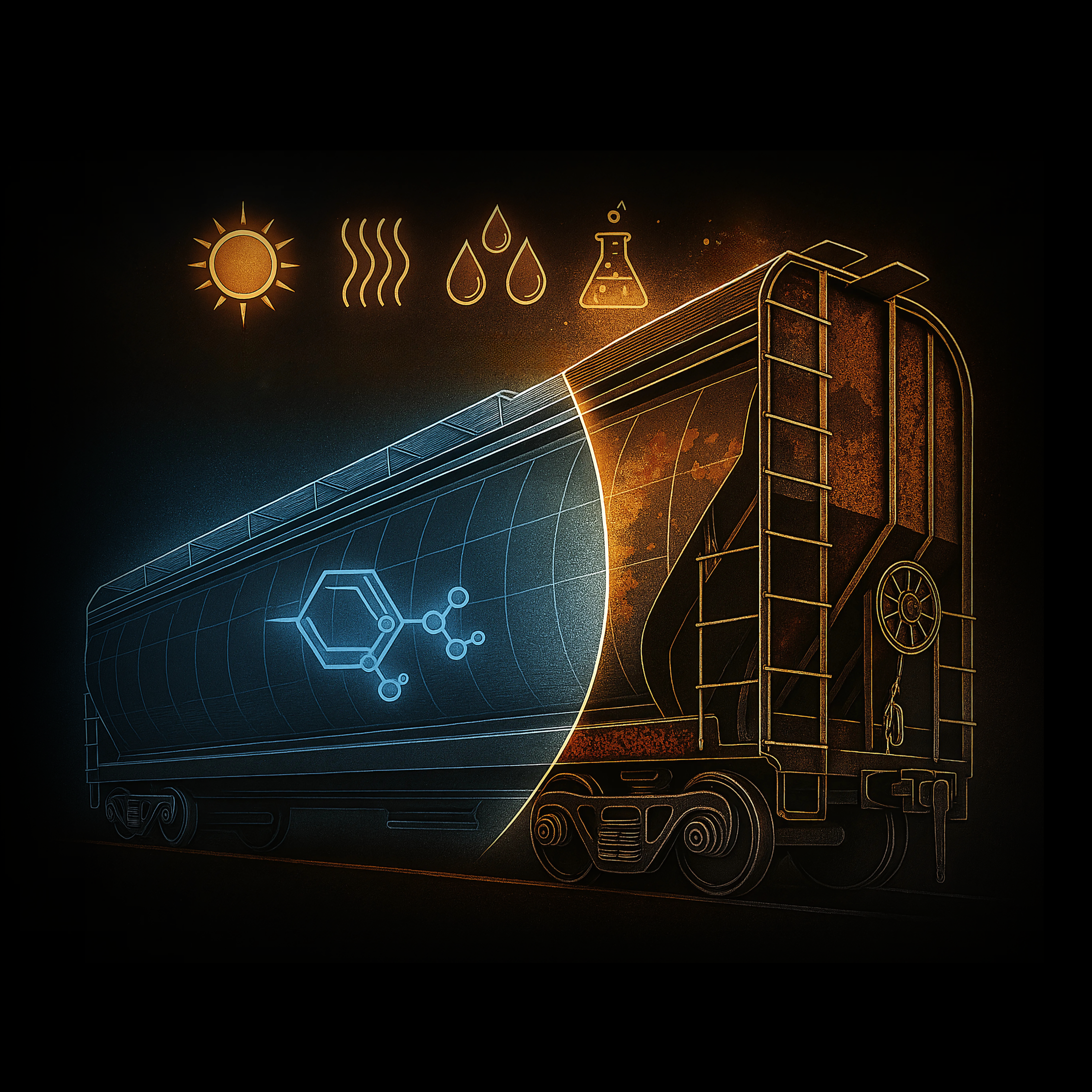
Recognizing these limitations, Advanced Polymer Coatings developed TriFLEX®, a direct-to-metal (DTM), single-coat protective system underpinned by a multi-resin formulation strategy. Rather than relying on stratified performance through multiple coats, TriFLEX integrates three distinct resin chemistries into a singular, unified matrix. This approach delivers a balanced property profile that addresses critical failure modes such as UV degradation, impact and abrasion damage, chemical attack, and cure-related defects, all within a single applied layer.
This article examines the technical foundation of TriFLEX's performance through a detailed exploration of the resin chemistry, crosslinking interactions, and field-driven formulation strategy that distinguishes this system in the industrial coatings market.